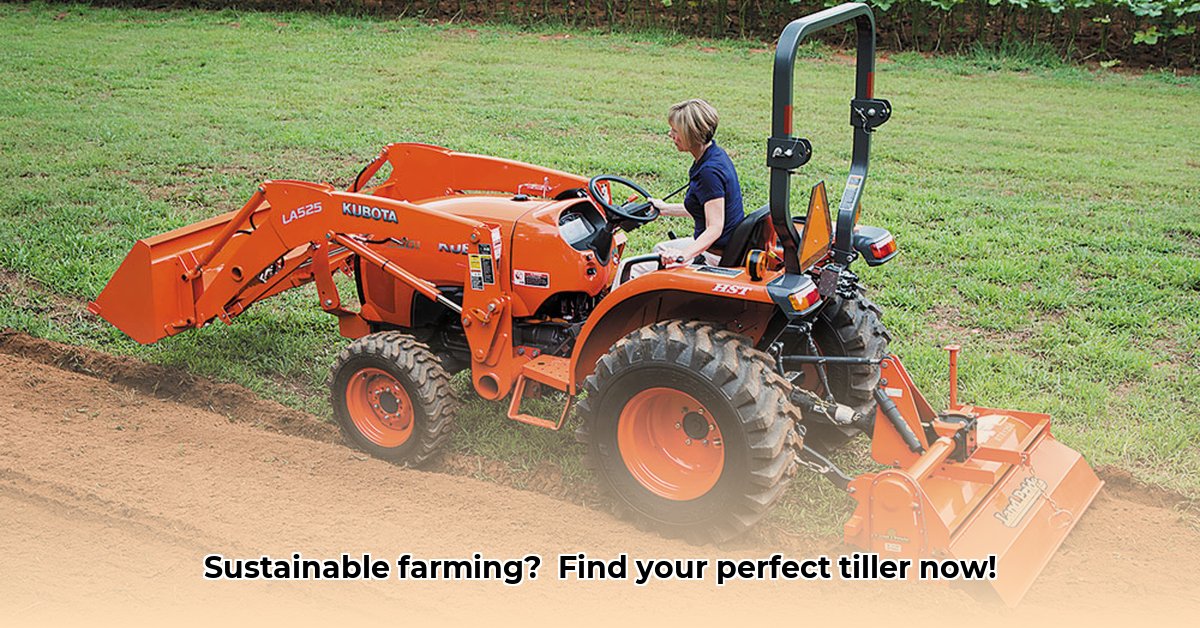
Choosing the right pull-behind tractor tiller is crucial for efficient and sustainable farming. This detailed review and instructional guide will help you select the ideal tiller for your specific needs, considering soil type, farm size, budget, and environmental impact. For more on tractor implements, check out this helpful resource on 3-point hitches.
Understanding Your Farming Operation: Soil, Size, and Style
Before selecting a tiller, carefully assess your farm's unique requirements. Consider these key factors:
Soil Type: Is your soil sandy, silty, clay, or a mix? Heavy clay soil demands a more robust tiller than lighter, sandy soil. Rocky soil necessitates a tiller designed to handle obstructions. Knowing your soil type is paramount in choosing the appropriate tine configuration and horsepower.
Farm Size: The size of your operation directly impacts the necessary tiller size and power. A small hobby farm needs a compact, maneuverable tiller, while a larger commercial farm requires a more powerful model to cover significant acreage efficiently. A larger tilling width significantly reduces working time but may limit maneuverability in smaller areas.
Farming Style: Do you practice no-till farming, reduced tillage, or conventional tillage? Your tillage philosophy influences your tiller selection. No-till or reduced-till methods might even negate the need for a tiller altogether. Adopting such practices aligns with sustainable farming principles and can significantly reduce soil degradation.
Exploring Tiller Types and Key Features
Pull-behind tractor tillers vary in design and capabilities. Understanding key features is essential for informed decision-making:
Tine Types: The tines are the rotating blades that till the soil. Different tine designs are optimized for various soil types. Some are ideal for breaking up compacted clay, whereas others are gentler on lighter soils. Consider the aggressive nature of tillage and its effect on your soil's structure. Reading reviews from fellow farmers using similar soil conditions offers invaluable insight.
Working Width: This refers to the tiller's coverage in a single pass. A wider tiller covers more ground per pass, increasing efficiency. However, wider tillers can be less maneuverable, especially in confined spaces or around obstacles. Balancing speed and maneuverability directly influences productivity.
Engine Power (Horsepower): Horsepower determines the tiller's ability to handle challenging soil conditions. Higher horsepower equates to greater power, enabling penetration of tough soils. However, this comes at the cost of increased fuel consumption and a higher initial price.
Maintenance and Parts: Ease of maintenance and the availability of replacement parts are critical. Simple designs with readily available parts minimize downtime and repair expenses. Consider the long-term cost of ownership while making your selection.
Hitch Type: Ensure compatibility between your tractor and the tiller's hitch. Various hitch styles exist, so verification is essential before purchase.
Sustainable Farming Practices and Tiller Selection
Sustainable farming prioritizes environmental responsibility. Consider these factors when selecting a tiller:
Fuel Efficiency: Gas-powered tillers contribute to greenhouse gas emissions. Prioritize fuel-efficient models to minimize your environmental footprint and operating costs. Opting for electric tillers might also be a viable path, although their current power and range might limit effectiveness.
Soil Health: Excessive tillage degrades soil structure, impacting fertility and water retention. Minimize tillage whenever possible and explore no-till or reduced-till farming approaches to protect soil health. Some tillers feature designs minimizing soil disruption.
Durability & Longevity: A durable tiller reduces the need for replacements, minimizing waste. This translates to lower environmental impact and savings over time.
Overall Cost of Ownership: Account for the initial purchase price, fuel expenses, maintenance costs, and potential repairs to gain a holistic understanding of the true cost.
Choosing the Right Tiller: A Step-by-Step Guide
Analyze Your Soil: Thoroughly assess your soil's texture (sandy, silty, clay, loam) and behavior. This significantly influences the tiller's requirements.
Determine Your Farm's Scale: How many acres do you need to till? This dictates the required working width and tiller power.
Budget Wisely: Develop a realistic budget that covers initial purchase price, fuel, maintenance, and potential repairs.
Compare Models Thoroughly: Research diverse tiller models, comparing features, power, and farmer reviews. Pay close attention to tiller type, working width, and maintenance ease.
Test Before You Buy (If Possible): If feasible, rent or borrow a tiller before purchase to gauge its performance and maneuverability in your fields.
Weighing the Pros and Cons of Different Tiller Types
Different tillers excel in specific situations. This comparison assists in your decision-making process:
| Tiller Type | Pros | Cons |
|---|---|---|
| Light-Duty Cultivator | Affordable, easy to maneuver, fuel-efficient, ideal for light soils. | Less effective in heavy clay or rocky soils, insufficient for large areas. |
| Heavy-Duty Tiller | Powerful, handles tough soils, efficient for large areas. | Higher initial cost, greater fuel consumption, higher maintenance requirements. |
| Electric Tiller | Environmentally friendly, quieter operation, relatively low maintenance. | More limited power, potentially shorter operating time, higher initial cost. |
Minimizing the Environmental Impact of Tilling
While gas-powered tillers contribute to emissions, you can mitigate their impact by:
Minimizing Tillage: Explore no-till or reduced-till methods to reduce soil disturbance and enhance soil health.
Choosing Fuel-Efficient Models: Select tillers with fuel-efficient engines to reduce fuel use and emissions.
Regular Maintenance: Well-maintained tillers operate more efficiently, lowering fuel consumption and emissions.
Selecting the right tiller is a significant investment. Thoroughly research, considering your soil type, farm size, budget, and sustainability goals to ensure a long-lasting and efficient tool. Consult experienced farmers or agricultural extension services for personalized advice.